Shoppers rarely read the technical specifications on a package of bath tissue or facial wipes. Instead, they squeeze the roll or brush a sheet against their skin. Within less than two seconds, the human nervous system processes friction, compressibility, and surface texture to render a verdict: premium or sandpaper.
For paper engineers and mill operators, delivering that velvety sensation is one of the industry’s toughest balancing acts. Cellulose fibers naturally want to lock together into a rigid, dense mat as water drains away. Left unchecked, this process produces a sheet closer to writing paper than facial tissue.
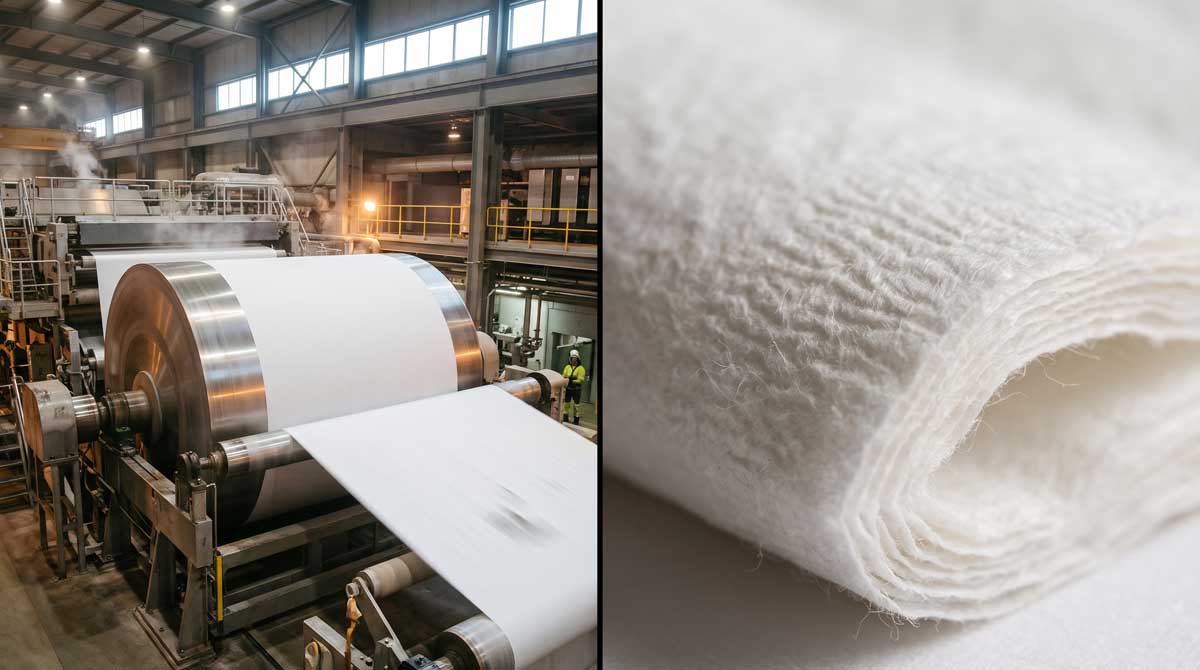
Tissue softening is the deliberate disruption of that natural rigidity. By combining targeted fiber selection, precision mechanical creping, advanced drying architectures, and specialized wet-end chemistry, modern mills engineer sheets that feel plush while retaining enough tensile strength to survive high-speed converting lines.
Understanding the Science of Tissue Softness
In papermaking, softness is not a single physical property. Sensory panels and laboratory instruments divide the sensation into two distinct mechanical components: bulk softness and surface softness.
- Bulk Softness (Crumple Softness): How easily the sheet yields when squeezed or folded in the hand. Bulk softness is governed by sheet density, caliper (thickness), and flexural rigidity. A lower elastic modulus allows the paper to drape and compress effortlessly.
- Surface Softness (Velvety Feel): How the sheet feels when lightly stroked across the skin. This depends on surface topography, the coefficient of friction, and the mobility of free fiber ends protruding from the plane of the web.
The central challenge of tissue manufacturing lies in hydrogen bonding. As a wet paper web dries, hydroxyl groups on adjacent cellulose fibers pull together, forming tight hydrogen bonds. While these bonds provide essential dry strength, every additional bond increases stiffness. Every softening technique in a tissue mill works by either preventing excessive inter-fiber bonding, mechanically breaking existing bonds, or lubricating the sheet surface.
Raw Material Selection: Where Softness Begins
No amount of downstream chemistry can fully rescue a poorly designed furnish. Softness starts in the pulper with the ratio and morphology of virgin or recycled fibers.
Hardwood vs. Softwood Kraft Pulp
Premium tissue grades rely on a calculated blend of hardwood and softwood fibers, each serving an opposing structural role:
| Fiber Type | Common Sources | Fiber Length | Primary Role in Tissue |
| Hardwood Pulp (NBHK / SBHK) | Eucalyptus, Birch, Acacia | Short (0.7 to 1.2 mm) | Creates surface softness, opacity, and a high number of free fiber ends. |
| Softwood Pulp (NBSK) | Northern Pine, Spruce, Fir | Long (2.5 to 4.0 mm) | Builds the load-bearing structural matrix for wet web runnability and tensile strength. |
| Non-Wood & Recycled Fibers | Bamboo, Deinked Pulp (DIP) | Variable (1.0 to 2.8 mm) | Offers sustainability credentials, though higher ash and hornification require extra softening. |
Bleached eucalyptus kraft pulp is the gold standard for tissue softness. Its short, stiff, thin-walled fibers resist collapsing into flat ribbons during pressing, maintaining high sheet bulk and projecting microscopic fiber tips that mimic the feel of velvet.
Stratified Headbox Technology and Refining
Rather than mixing hardwood and softwood fibers into a homogeneous slurry, modern crescent formers use multi-layer (stratified) headboxes. Mill operators pump long softwood fibers into the center core layer for strength while placing 100 percent eucalyptus fibers on the outer layers that touch the skin.
Refining is kept strictly to the softwood stream. Mechanical refining fibrillates fiber walls to boost tensile strength, but refining hardwood pulp collapses its lumen, increases sheet density, and destroys bulk softness.
Mechanical Tissue Softening Processes
Once the fiber mat forms on the wire, mechanical energy takes over as the primary driver of structural softness.
Yankee Dryer Coating and Doctor Blade Creping
The heart of conventional tissue making is the Yankee dryer—a massive, steam-heated cast-iron or steel cylinder operating at high temperatures. As the wet web transfers from the press felt onto the Yankee surface, a sprayed chemical coating made of polyamidoamine-epichlorohydrin (PAE) resins and polyvinyl alcohol (PVOH) glues the sheet to the metal shell.
At the dry end of the cylinder, the sheet hits a steel or ceramic creping doctor blade. This impact scrapes the paper off the dryer at speeds exceeding 1,800 meters per minute, folding the web into microscopic accordion-like ridges:
- Delamination: The impact shatters internal fiber-to-fiber bonds, drastically lowering bending stiffness.
- Bulk Generation: The micro-folds multiply sheet caliper and stretch (crepe ratio typically ranges between 15 percent and 30 percent).
- Surface Protrusion: Breaking bonds at the blade edge lifts thousands of individual hardwood fiber ends above the sheet plane, creating a plush handfeel.
Blade bevel angle, stick-to-release modifier ratios in the Yankee coating, and moisture content at the blade (usually 4 percent to 7 percent) dictate whether the crepe structure is fine and silky or coarse and harsh.
Through-Air Drying (TAD) and Structured Tissue
Conventional wet pressing squeezes water out of the sheet mechanically, compacting the web and forcing fibers into intimate contact. Through-Air Drying (TAD) eliminates wet pressing altogether.
In a TAD machine, the wet web is transferred onto a three-dimensional, knuckle-patterned molding fabric. Hot air is blown directly through the porous sheet, evaporating water while the fibers rest undisturbed inside the fabric pockets. Because the fibers are never crushed together while wet, TAD sheets achieve nearly double the bulk and water-holding capacity of conventional dry-crepe tissue at the same basis weight.
For mills seeking TAD-like softness without the high natural gas consumption of full air-drying, hybrid textured technologies—such as Valmet Advantage NTT, Voith ATMOS, and Andritz PrimeLine Tex—use textured belts and shoe presses to mold bulk cushions into the wet web at significantly lower energy costs.
Calendering and Micro-Embossing
After leaving the Yankee reel, the raw parent roll undergoes dry-end finishing in the converting plant:
- Calendering: Passing the sheet through precision steel-to-steel or steel-to-rubber nip rolls flattens sharp creping peaks. While over-calendering crushes bulk, light surface calendering reduces surface roughness and imparts a silky glide.
- Embossing: Engraved steel rollers press patterns into individual plies before marrying them via point-to-point (PTP) or nested (micro-deco) lamination. Embossing traps air pockets between plies, enhancing perceived cushion and compressional softness.
Chemical Methods in Tissue Softening
When mechanical adjustments reach their physical limits—or when mills run higher proportions of stiff recycled fiber—papermakers turn to specialty softening chemistry.
Wet-End Chemical Debonders
Tissue softening debonders are added directly to the thick stock or fan pump prior to sheet formation. Most commercial debonders are cationic surfactants, including imidazolinium compounds, dialkyldimethyl quaternary ammonium salts, and biodegradable esterquats.
Because cellulose fibers carry a natural negative surface charge in water, the positively charged head of the debonder molecule anchors onto the fiber surface without needing retention aids. The molecule’s hydrophobic fatty acid tails face outward, physically blocking adjacent cellulose strands from forming hydrogen bonds during drying.
Debonders can reduce sheet stiffness by 20 percent to 40 percent, though they carry a direct trade-off: they reduce dry tensile strength. Mills compensate for this loss by co-dosing amphoteric starch, carboxymethyl cellulose (CMC), or polyacrylamide dry-strength resins into the softwood strength layer.
Surface Lotions, Silicones, and Dry-End Softeners
Unlike wet-end debonders that disrupt internal structure, topical softeners modify the outer tactile boundary of the paper:
- Polysiloxane (Silicone) Emulsions: Amino-functional or polyether-modified silicones applied at the Yankee spray boom or converting calendar provide an ultra-low coefficient of friction, delivering a slick, silky feel.
- Lotion Formulations: Used extensively in premium balm facial tissues, heated mixtures of mineral oils, stearyl alcohol, ceramides, and botanical waxes are rotogravure-printed or slot-die coated onto the dry web. These transfer a microscopic lubricating film to the user’s skin, preventing redness during repeated nose-blowing.
Enzymatic Fiber Modification
As environmental regulations tighten around quaternary ammonium compounds in mill effluent, bio-enzymatic softening has gained traction. Targeted cellulase and hemicellulase enzymes selectively clip amorphous cellulose fibrils on the fiber exterior. Reducing messy surface fibrillation prevents excessive inter-fiber entanglement, improving softness and drainage simultaneously without leaving chemical residues in the white water loop.
Measuring Softness: How Mills Quantify “Handfeel”
Historically, mills relied on trained human sensory panels to rank tissue samples against benchmark references. While human perception remains vital, subjective testing is slow and impossible to integrate into real-time machine automation.
Today, quality control labs rely on acoustic and mechanical profiling, led by the EMTEC Tissue Softness Analyzer (TSA). The TSA lowers a rotating head equipped with tiny vertical blades onto a clamped tissue sample and records the sound spectrum generated:
- TS7 Peak (Around 6.5 kHz): Triggered by the blades plucking individual protruding fibers on the surface. A lower TS7 decibel value indicates softer, more flexible surface fibers (true surface softness).
- TS750 Peak (Around 750 Hz): Generated as the blades travel across creping folds and embossing hills. This reflects surface smoothness and texture.
- Deformation (D): Measured simultaneously by pressing the rotor downward to quantify sheet stiffness and bulk compressibility.
Combining TS7, TS750, and caliper measurements into a mathematical Handfeel (HF) Index allows papermakers to isolate whether a softness drop was caused by a worn creping blade, a shift in pulp refining, or an under-dosed chemical debonder.
Balancing Softness, Strength, and Sustainability in Modern Mills
Engineering high-performance tissue is an exercise in precision compromises. Pushing creping Doctor blade impact or debonder dosage too far weakens the web, triggering sheet breaks at the reel and dust buildup in converting lanes. Conversely, over-refining the furnish to chase machine runnability turns a luxury bath tissue into a harsh economy sheet.
The most competitive mills treat tissue softening as a holistic system. By pairing stratified eucalyptus layers with optimized Yankee adhesive films, energy-efficient structured drying, and biodegradable esterquat debonders, manufacturers can hit high Handfeel scores while cutting fiber weight and water usage.
Frequently Asked Questions (FAQs)
What is the difference between bulk softness and surface softness in tissue paper? Bulk softness refers to how easily a tissue sheet compresses, bends, and crumples in your hand, which is controlled by low sheet density and weak inter-fiber bonding. Surface softness refers to the velvety, low-friction feel when you stroke the paper across your skin, which is driven by protruding free fiber ends and surface lubricants.
Why is eucalyptus pulp preferred for soft tissue manufacturing? Eucalyptus fibers are exceptionally short, slender, and numerous per gram of pulp compared to softwood fibers. Because they resist collapsing during pressing, they maintain high sheet thickness (bulk) and create millions of microscopic free fiber ends on the surface that feel plush against human skin.
How do chemical debonders make tissue paper softer? Chemical debonders are cationic surfactants with hydrophobic fatty tails. They attach to negatively charged cellulose fibers in the wet end and act as molecular spacers, preventing fibers from forming rigid hydrogen bonds as the sheet dries.
Does making tissue softer make it weaker? Yes, almost all mechanical and chemical softening methods—such as aggressive creping or adding wet-end debonders—work by breaking or blocking fiber-to-fiber bonds, which lowers dry tensile strength. Mills counteract this by using long softwood fibers in a center ply or adding specialized dry-strength resins.